
MAMMAL · ENDANGERED
African savanna elephantLoxodonta africana
Read family and route before photographing an African savanna elephant: who protects the calf, where the group intends to move, and whether vehicles block water or a path.
- Common name
- African savanna elephant
- Scientific name
- Loxodonta africana
- Catalog status
- Endangered
- Activity
- Dawn, dusk and night
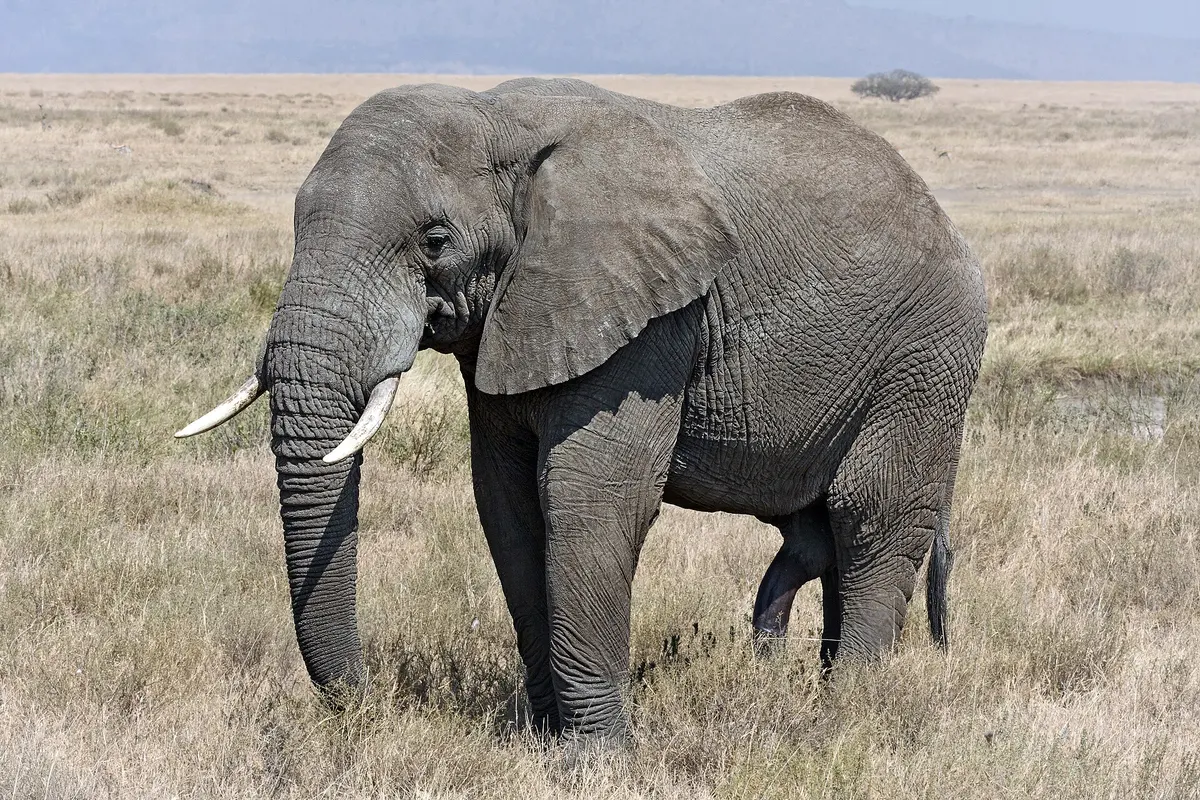
Fan-shaped ears, ear-edge notches, tusk shape, large tracks and broken vegetation leading to water
Forest elephants are generally smaller with different ears and tusk orientation; body size alone is unreliable at distance.
About African savanna elephant
African savanna elephants live in grassland, woodland and semi-desert across sub-Saharan Africa. Females and young form matrilineal families. Adult males usually leave their birth family and travel alone or in loose male groups. Water, food and safe corridors direct seasonal movement.
Identification
The savanna elephant is generally larger than the African forest elephant, with broad ears and tusks that curve outward. The trunk handles food, water, touch and scent. Ear notches, tusk shape, tail hair and skin marks help observers recognise individuals.
Habitat
Savanna elephants use open grass, scrub, mopane woodland and seasonal rivers. They move between protected areas, so fences, roads and farms affect the route. Dry-season water points can create dense gatherings and conflict with vehicles.
How to find evidence in the field
Read evidence that does not need to approach you, then decide whether to remain in place.
Family formation
Calves often remain between adult females; a tightening group needs more space.
Water paths
Broad compacted routes are daily infrastructure and must not be blocked by vehicles.
Browse signs
Fresh breaks, stripped bark and dung together indicate recent feeding.
Warning behaviour
Fixed attention, raised head, spread ears, dust or a mock charge mean the distance is too small.
From diet to life history
Where energy comes from
Grass, leaves, bark, shoots and fruit change with season, while water reorganises daily movement.
How it passes through life
Females and young form long-term matrilineal families, while adult males usually leave; older animals carry social and landscape knowledge.
What it changes
By opening paths, altering trees, digging water and dispersing seed, elephants act as ecosystem engineers.
Elephants push or strip trees, open paths, dig for water and carry seeds over long distances. These actions alter vegetation and can create access to water and movement routes for other species. The effect changes with elephant density, rainfall and the size of the landscape.
Why conservation matters
Poaching, habitat loss and conflict with people remain major pressures. Stable populations need shared data across borders, protected corridors and local coexistence measures. Crop protection, warning systems and responses to losses must fit the place. Chasing animals can create additional risk.
Where to understand it
These destinations connect African savanna elephant with a wider habitat. A relationship in the catalog never guarantees a sighting.
Animal observation boundaries
- Do not park across a water point, river access or animal path. Switch off the engine and keep room to reverse when a family approaches.
- Spread ears, a raised head, dust throwing or a mock charge mean the distance is too small. Back away slowly.
- Never drive between a female and young, leave the vehicle to approach or publish a current location that could assist poaching.
Sources
These sources support the identification, habitat and observation guidance on this page. Conservation assessments and local population conditions can change, so current management advice still takes priority in the field.
- IUCN SSC · African Elephant Specialist Group
- GBIF · Loxodonta africana
- IUCN Red List · Loxodonta africana
- IUCN · Shrinking spaces for the world’s largest land animal
Page updated . To report an error, send the page URL and a verifiable source through the contact page.