
WHEN TO GO
Best time for an African safari: dry, green or migration season
The best season is usually a ranking of wildlife concentration, green landscapes, visitor numbers and price. Change the order and the answer changes too.
- Large mammals
- Start with dry-season water sources
- Green scenery and birds
- Research green-season conditions
- Great Migration
- Choose a specific region by month
Dry-season wildlife viewing and travel conditions
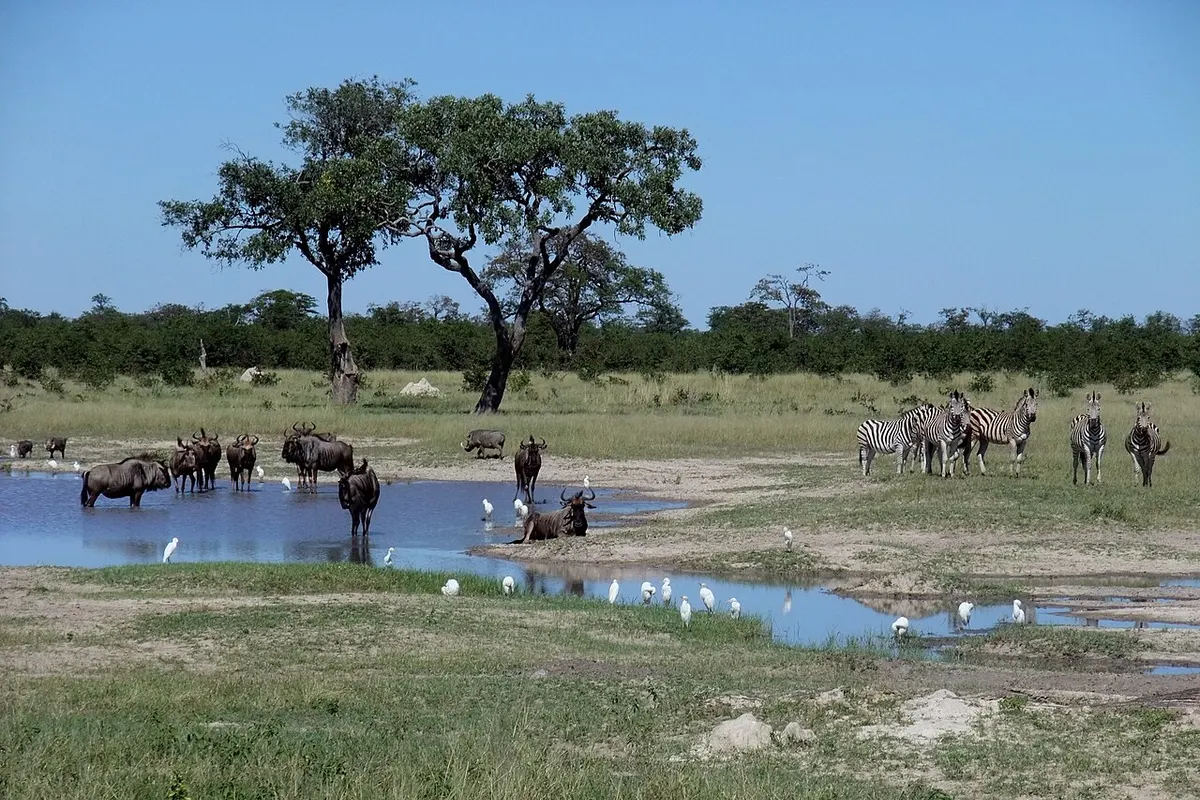
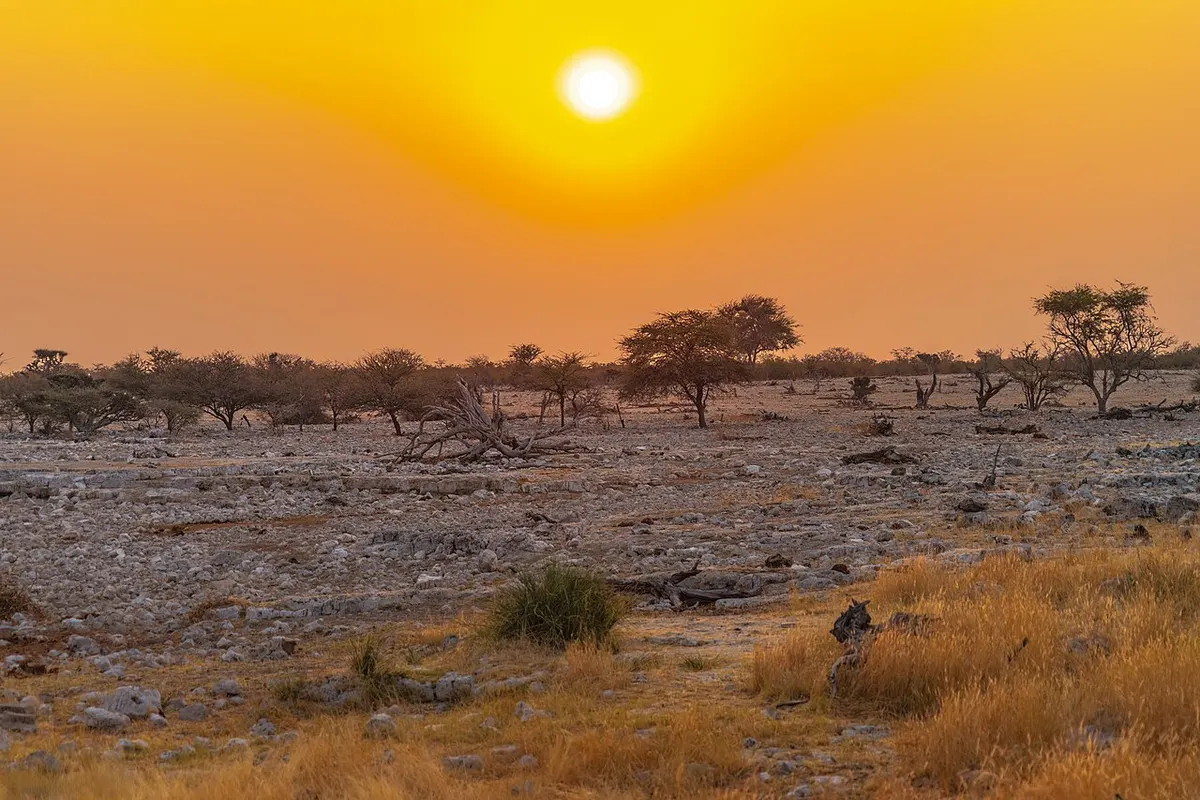
In places such as Chobe, Etosha and Kruger, shrinking dry-season water sources bring elephants, antelope and predators towards rivers and waterholes. Thinner vegetation can make wildlife easier to see. The trade-off is equally clear: popular water and roads attract more vehicles, while the late dry season can be hot and dusty.
May and October do not feel the same even when both belong to a dry period. Earlier months are often cooler. Later months may concentrate wildlife more strongly but bring greater heat and dryness.
What to see in the green season and what to plan for
Rain brings back grass, insects and temporary water. Large animals no longer need to crowd a few waterholes, so finding them can take longer. Birds, breeding behaviour, cloud formations and grassland colour become richer. Some camps also lower prices and roads may have fewer vehicles.
A green-season trip needs room for wet roads, showers and a changed route. If an operator describes the rainy season as entirely quiet or always inexpensive, ask which camps close and which roads are most affected.
Choose travel months by animal activity
| Goal | Window to research | Trade-off |
|---|---|---|
| Serengeti calving | Southern plains, January to March | Showers and careful camp placement |
| Mara River migration | Northern region and Maasai Mara, July to October | Peak-season traffic, with no guaranteed crossing |
| Elephants on the Chobe Riverfront | Dry season, often May to October | Hotter and busier towards the end |
| Etosha waterholes | Dry months | Dry scenery and large day-night temperature changes |
| Green-season birds and grass | Local rainy and post-rain periods | More variation in roads and camp opening |
Set the final dates around holiday time and budget
Dates you can use matter more than a theoretical perfect month. Select two or three possible windows, then compare local rainfall, park rules, camp locations and flights. Families should also check age limits, long drives and health questions with a qualified medical professional.
Ask for quotes after narrowing the dates. Peak-season camps and small aircraft become scarce, but booking the wrong region early does not make it the right route.
BOOKING AND VERIFICATION
Operator and official booking links
These links lead to properties, operators, managing authorities or industry associations. SafariWild does not take part in the transaction or receive commission from these editorial links. Check the contract, insurance, cancellation terms and receiving company before paying.
Related destinations
Related species
Sources
These sources support the habitat, season and observation guidance in this article. Current permits, closures, weather and local rules still need a separate check before travel.
- Botswana TourismSupports: Chobe, Okavango and local ways to travel
- Namibia MEFT: Etosha National ParkSupports: Etosha waterholes, habitats and wildlife
- Magical Kenya: The Great MigrationSupports: Migration windows in the Maasai Mara
- Tanzania Tourism: SerengetiSupports: Serengeti migration and regional background
Page updated . To report an error, send the page URL and a verifiable source through the contact page.