
PLANT · LEAST CONCERN
African baobabAdansonia digitata
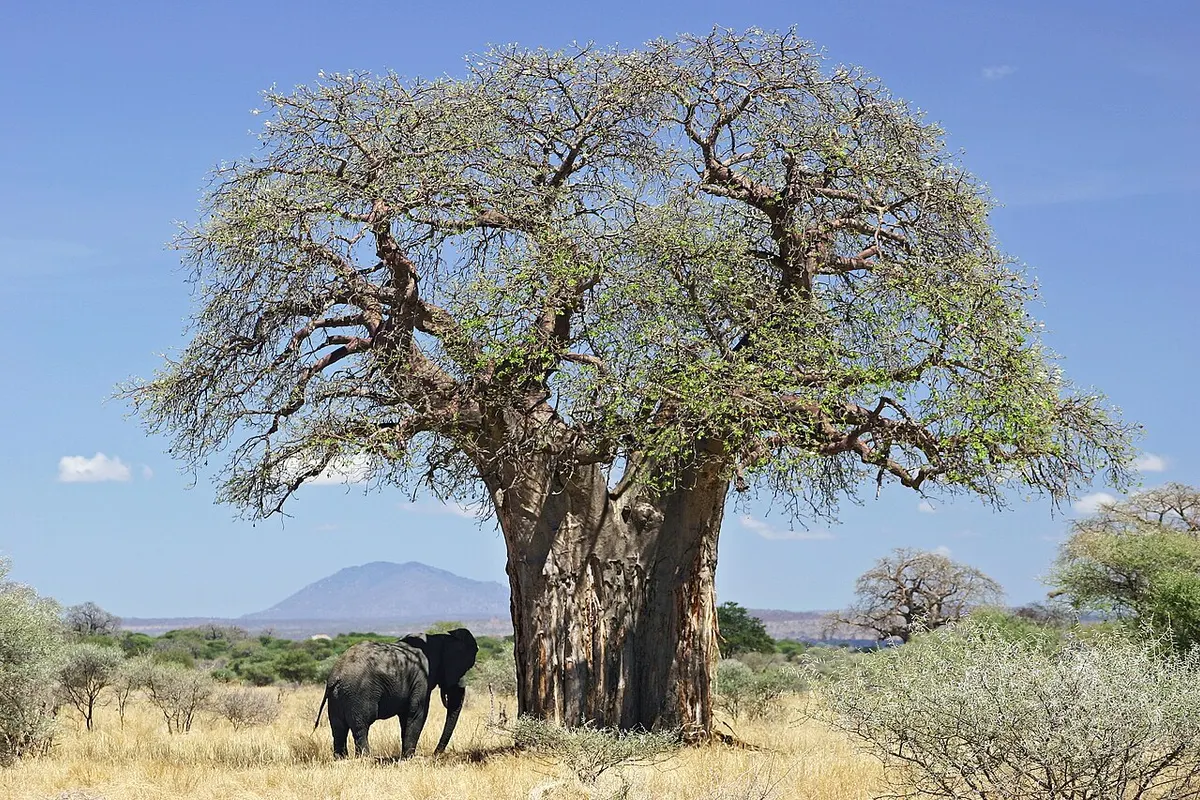
African baobab is adapted to seasonal drought. A massive trunk, palmate leaves and long-stalked hanging white flowers form the key combination. Leaflessness in the dry season is phenology, not proof of death.
- Common name
- African baobab
- Scientific name
- Adansonia digitata
- Catalog status
- Least concern
- Phenology
- Deciduous; new leaves and flowers in the rainy season
Massive bottle-like trunk, palmate leaves, hanging white flowers and hard oblong fruit
Other Adansonia occur in Madagascar and Australia; confirm African baobab with native range, leaves, flowers and fruit.
What kind of plant is African baobab
The African baobab is a massive deciduous tree of tropical African drylands. Its broad trunk stores water in living tissue, while a sparse crown carries leaves mainly during the wet season. Individual trees can become prominent food, shade and shelter sites for wildlife and people without needing a mythical age attached to them.
Identify leaves, flowers, fruit and bark
Look for a swollen smooth-barked trunk, thick tapering branches and palmately compound leaves when the crown is in leaf. Large white hanging flowers open around the night period and later develop into hard oval fruit. A leafless baobab in the dry season is following its normal cycle, not necessarily dying.
Where it grows
African baobabs occur in savanna, dry woodland and settled landscapes where temperature, rainfall and drainage remain suitable. Fire, browsing, cultivation and local water conditions shape recruitment. Mature trees can persist where few seedlings survive, so age structure matters when reading a population.
How to find evidence in the field
Read evidence that does not need to approach you, then decide whether to remain in place.
Dry-season leaf loss
A leafless crown can still be read from trunk and branching; never scrape bark to test life.
Palmate leaves
In the wet season several leaflets radiate from one point.
Hanging white flowers
Long-stalked flowers connect with nocturnal pollinators; avoid sustained lighting.
Fruit and cavities
Fruit, hollows and bark are used by wildlife and communities; do not enter occupied cavities.
From form to phenology
How it occupies space
A deciduous tree of seasonally dry tropical landscapes, with massive water-storing tissue.
When it changes
Leaves generally follow rain and fall in the dry season; flowering and fruiting track regional rainfall rather than one Africa-wide calendar.
How the next generation moves
White flowers interact with nocturnal pollinators, while large animals and people can move seeds from the fruit.
Flowers are visited by nocturnal animals including bats, and fruit, nectar, leaves and cavities support a wider community. Fallen material returns nutrients to dry soils. Human use of fruit, leaves and fibre is also part of many local landscapes and should be understood through local practice rather than treated as ecological damage by default.
Why conservation matters
The species is widespread, but individual stands can still lose old trees or fail to recruit young ones. Monitoring should separate normal seasonal leaf loss from drought stress, disease, fire damage and land-use change. Protecting roots, pollinators and younger trees is as important as photographing the largest trunk.
Plant observation boundaries
- View from existing tracks and keep vehicles, feet and camps away from exposed roots and compacted soil around the trunk.
- Do not carve bark, climb into cavities, disturb roosting animals or collect fruit and flowers without local permission.
- Ask before photographing or entering a culturally important tree; ecological interest does not remove community ownership and custom.
Sources
These sources support the identification, habitat and observation guidance on this page. Conservation assessments and local population conditions can change, so current management advice still takes priority in the field.
- GBIF · Adansonia digitata
- Kew Plants of the World Online · Adansonia digitata
- Kew Plants of the World Online · Adansonia digitata
Page updated . To report an error, send the page URL and a verifiable source through the contact page.